
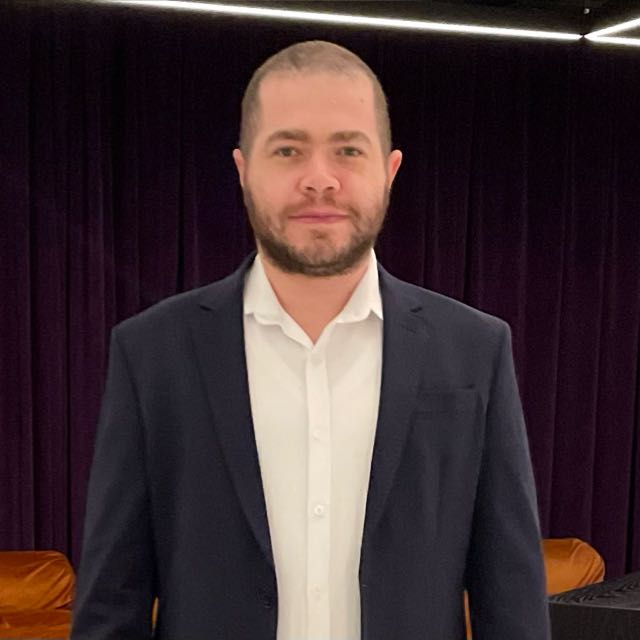
Bruno Luis Barbosa Cavalcante is a quantitative economist working in Brazil’s financial market, specializing in forecasting, econometrics, machine learning, and causal inference. He holds a Bachelor’s degree in Economics from PUC-SP, a specialization in Finance from INSPER, and a Master’s degree in Economics from FGV-EESP. He is currently a PhD candidate in Economics at FGV-EESP, Brazil.
Bruno’s research focuses on the identification and macroeconomic effects of monetary policy shocks, requiring a strong foundation in causal inference, econometrics, machine learning, time-series analysis, and macroeconomics. He also serves as a teaching assistant in graduate-level courses in econometrics, macroeconomics, and forecasting. His professional work involves forecasting, pricing, and quantitative risk analysis, connecting advanced empirical methods to real-world financial applications.
How did you become a forecaster?
I became a forecaster through formal training in economics and continuous exposure to applied quantitative problems in the Brazilian financial market. My academic background in econometrics and macroeconomics naturally led me to time-series forecasting and predictive modeling.
Over time, I specialized in combining statistical forecasting models with machine learning techniques, emphasizing robustness, validation, and uncertainty.
What areas of forecasting interest you?
My main interests include:
Economic and financial time-series forecasting
Monetary policy shocks and macroeconomic forecasting
High-frequency econometrics
Credit risk and default forecasting
Derivatives modeling and risk metrics
Machine learning for forecasting
Causal inference and treatment effects
How has the International Journal of Forecasting influenced you?
The International Journal of Forecasting has strongly influenced my approach to forecasting, particularly regarding forecast evaluation, probabilistic forecasting, and methodological rigor.
Several IJF papers have shaped how I integrate econometrics, machine learning, and decision-oriented forecasting in both academic research and applied work.
What do you do in your free time?
In my free time, I focus on technical research in forecasting, econometrics, and machine learning. I routinely replicate academic papers, develop forecasting models in Python and R, and study advanced methods in causal inference and time-series analysis.
I also collect rare and out-of-print books in economics, statistics, and forecasting, particularly classic texts in econometrics and macroeconomic theory.