

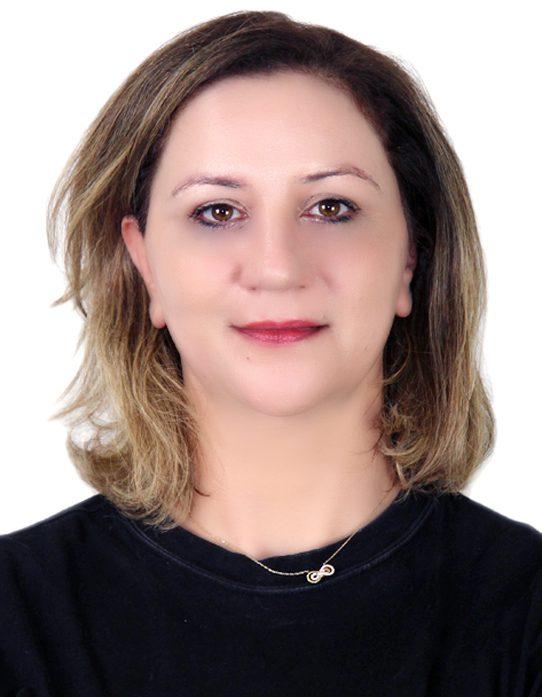
Sana Gaied Chortane is a researcher in Finance and Applied Mathematics at Université Lumière Lyon 2 (France). Her work focuses on forecasting, entropy-based modelling, defensive prediction, robust and probabilistic forecasting, and quantitative methods applied to sustainable finance, ESG risk, climate risk, and cryptocurrency markets. She bridges advanced mathematical modelling with real-world financial applications, contributing to several international publications and conferences.
How did you become a forecaster?
My path into forecasting grew naturally from my PhD in Applied Mathematics. During my research, I became increasingly interested in predictive modelling, uncertainty quantification, and entropy-based approaches for analysing complex financial and sustainable systems. This led me to explore forecasting in depth-ranging from classical time-series models to robust, probabilistic, hierarchical, and defensive prediction methods. Today, forecasting is at the core of my work, enabling me to integrate advanced mathematics with real-world applications in finance, ESG and climate risk, and adaptive market behaviour.
What areas of forecasting interest you?
My forecasting interests include probabilistic forecasting, robust and adaptive forecasting, defensive prediction, and hybrid AI–statistical approaches. I am especially focused on forecasting financial risks, ESG and climate-related indicators, volatility dynamics, and long-term sustainability metrics. I am also interested in hierarchical forecasting, uncertainty quantification, and physics-informed predictive models.
How has the International Journal of Forecasting influenced you?
The International Journal of Forecasting has had a profound influence on my academic development. Throughout my doctoral work in Applied Mathematics and Finance, IJF has served as a primary source of methodological inspiration, particularly in the areas of probabilistic forecasting, uncertainty quantification, robust and adversarial forecasting, hierarchical forecasting, and hybrid forecasting frameworks. The journal’s rigorous approach to empirical validation and model comparison has deeply shaped the way I design and evaluate forecasting models in my own research—especially in applications related to ESG and climate risk, volatility modelling, adaptive market dynamics, and defensive prediction. IJF has also broadened my perspective on interdisciplinary forecasting, encouraging me to bridge mathematical modelling, economic systems, and sustainable finance.
What do you do in your free time?
Outside of research, I enjoy reading, learning new analytical tools, attending scientific events, and exploring different cultures through travel. I also value activities that help me stay grounded, such as walking, cooking, and spending meaningful time with my family.