

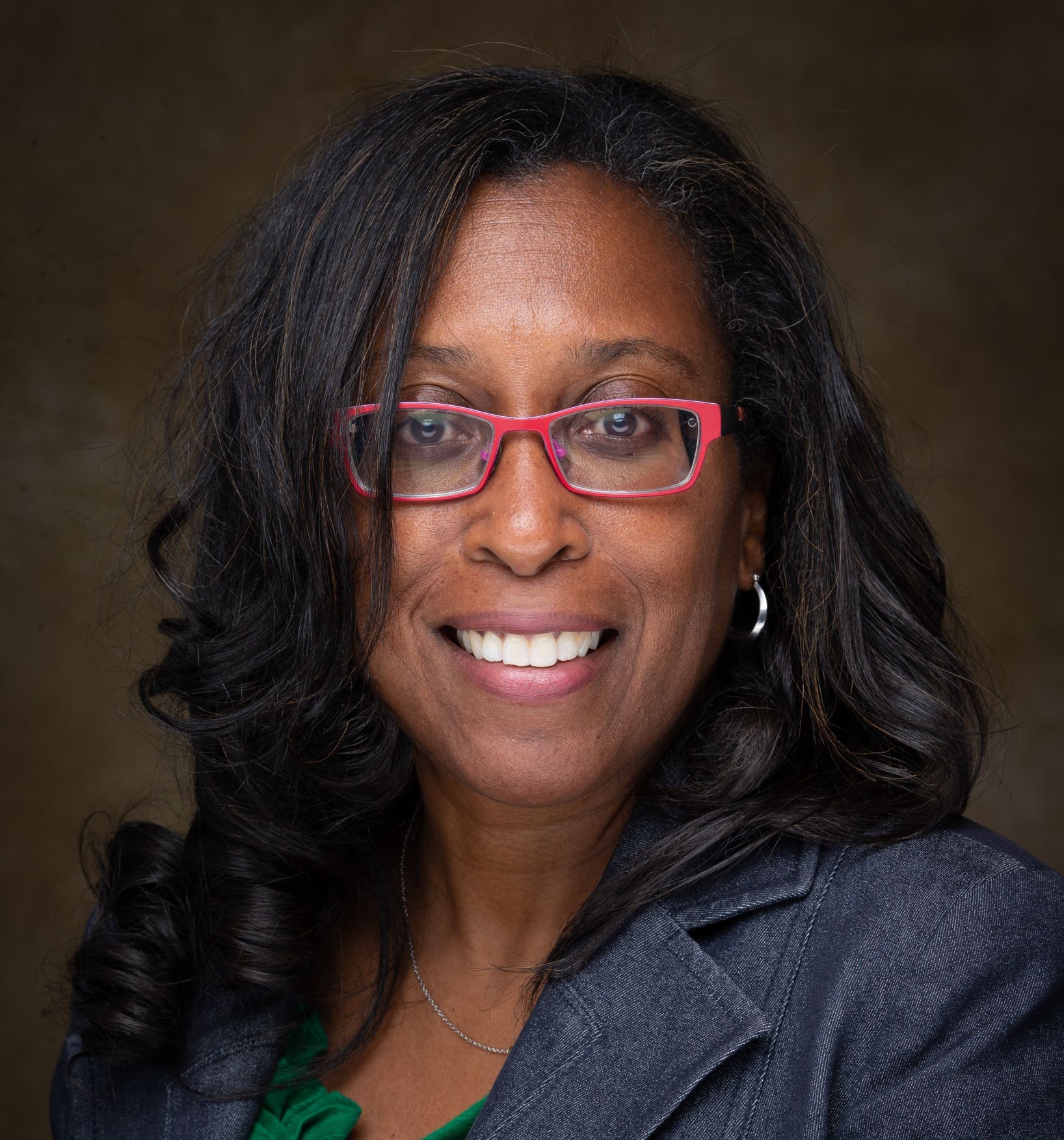
Lauren B. Davis is a Professor in the Department of Industrial and Systems Engineering at North Carolina A&T State University (NCA&T). She received her B.S. in Computational Mathematics from Rochester Institute of Technology, M.S. in Industrial and Management Engineering from Rensselaer Polytechnic Institute, and her Ph.D. in Industrial and Systems Engineering from North Carolina State University. in 2005. Prior to joining NCA&T she spent 12 years as a senior software engineer at IBM supporting SAP implementations in Research Triangle Park (NC), Guadalajara (Mexico) and Shenzhen (China). Her academic research focuses on stochastic modeling of supply chain systems in for-profit and non-profit settings, with application areas in hunger relief, humanitarian logistics, and homeland security. Of particular interest is the use of statistical and machine learning forecasting techniques to improve operations of hunger relief supply chains. Her work has appeared in several journals such as: The International Journal of Forecasting, Annals of Operations Research, International Journal of Production Economics, European Journal of Operations Research, Journal of Hunger and Environmental Nutrition, and Journal of Humanitarian Logistics and Supply Chain Management.
Dr. Davis is an active member of the Institute of Industrial and Systems Engineers, Institute for the Operations Research and Management Sciences (INFORMS) and has served as the President of the Minority Issues Forum of INFORMS. She currently serves as a board member of the Second Harvest Food Bank of Northwest North Carolina; advisory board member of Foresight, The International Journal of Applied Forecasting; and associate editor for Transportation Science.
How did you become a forecaster?
As part of my background in Industrial and Systems Engineering, I was exposed to forecasting, primarily in the area of demand forecasting in for-profit supply chains. I became really interested in exploring this topic more deeply when my research evolved into the study of humanitarian supply chains and more specifically in supply chains supporting hunger relief. These supply chains face a lot of uncertainty, on the demand and on the supply side.
What areas of forecasting interest you?
I am interested in time series forecasting approaches and my work has mostly utilized these techniques in conjunction with optimization models to drive decision-making on equitable food distribution. However, I am always interested in learning and experimenting with other techniques. I am more interested in the forecasting problem and finding out the best way to tackle the problem. This may lead me to examine other approaches like machine learning or stochastic models that characterize supply and demand uncertainty.
How has the International Journal of Forecasting influenced you?
IJF serves as my main source for understanding the latest advancements in the field of forecasting. Many of the thought leaders in the field publish in IJF and my technical understanding of the field in general has increased, resulting in my first paper published in IJF last year.
What do you do in your free time?
In my free time, I like to spend time with my dog Brixton, travel with family and friends, binge-watching a good science fiction or fantasy show, and occasionally work on a sewing project.